The electrical and energy infrastructure that powers homes, industries, and cities relies on systems where reliability is non-negotiable. A faulty circuit breaker, a transformer operating outside its specifications, or a regulator that does not function properly can have consequences ranging from service interruptions to safety risks for people.
Behind each of these systems are precision metal components that perform critical functions related to contact, retention, conductivity, and protection. RYPSA serves the energy sector with components manufactured to the same quality standards we apply in the automotive industry, ensuring reliability in every part we integrate into these systems.
RYPSA's Applications in the Energy Sector
RYPSA is used in a wide range of applications in the energy sector, including circuit breakers, switches, regulators, substations, lighting fixtures, transformers, and solar panels.
In each of these systems, RYPSA's metal components perform specific functions:
- Circuit breakers and switches: contact springs, retaining clips, and stamped parts that are part of the electrical switching and protection mechanism
- Regulators and substations: precision components for control, retention, and fastening mechanisms for internal parts
- Transformers: retaining rings, bushings, and wire forms for securing and positioning coils and cores
- Lighting: Clips, fasteners, and wire forms for securing and supporting components in industrial and commercial lighting systems
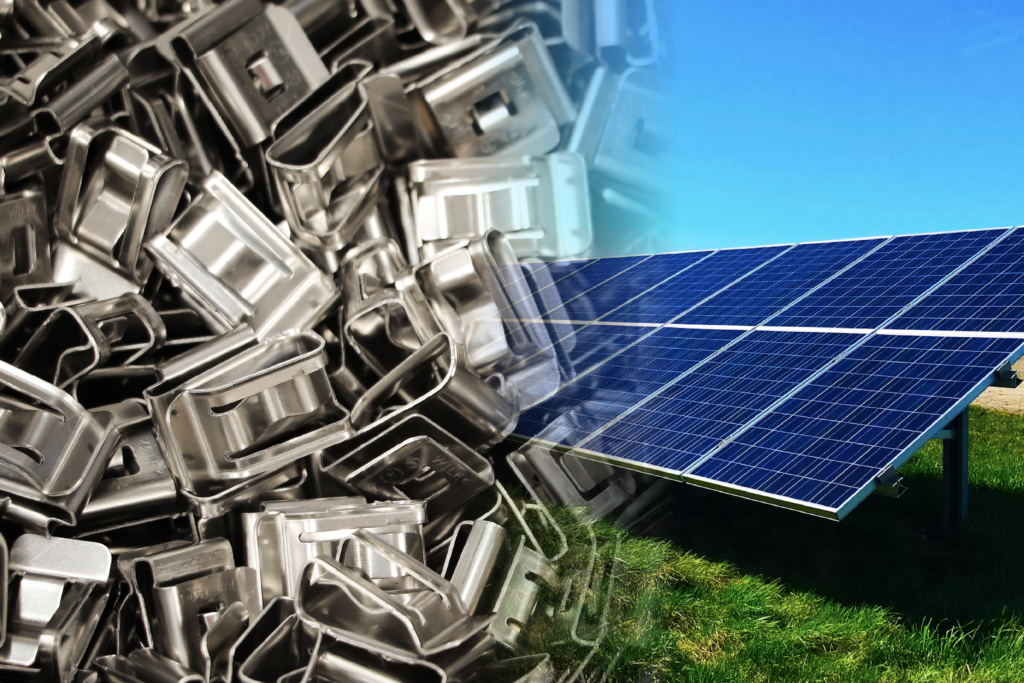
- Solar panels: clips and fasteners for mounting and securing systems, and electrical contact components in the modules
Why is precision critical in components for the energy sector?
In the energy sector, metal components operate under demanding conditions: temperature fluctuations, electrical currents, mechanical vibration, and continuous operating cycles over many years. A part that is out of tolerance in a circuit breaker can compromise its interrupting capacity; a contact spring with the incorrect load can cause electrical arcing or loss of contact.
This requirement stipulates that each component must be manufactured using:
- Materials specifically selected for the electrical or mechanical function they will perform
- Strict dimensional tolerances to ensure the mechanism functions properly
- Surface finishes compatible with the electrical and environmental requirements of the application
- Quality control that ensures consistency from batch to batch over years of supply
RYPSA Materials and Finishes for Electrical and Energy Applications
The selection of materials for components in the energy sector takes into account mechanical properties, electrical compatibility, and resistance to the operating environment. At RYPSA, we work with materials such as T-302, T-304, and 17-7PH stainless steels for applications where corrosion resistance is a priority, and copper and nickel alloys for components that require electrical conductivity.
Our available finishes include options specifically designed for the electrical sector, such as tin and silver for contacts, passivation for stainless steel, and high-resistance coatings such as Delta-Tone and E-Coat for components exposed to harsh environments. All of them comply with industry environmental standards and are validated through salt spray testing.
RYPSA: The Metal Components Supplier the Energy Sector Needs
Manufacturing components for the energy sector requires a supplier that combines technical expertise, certified materials, controlled processes, and a culture of quality that tolerates no compromises. At RYPSA, these characteristics are not just empty words: they are backed by more than 50 years of experience as a 100% Mexican company and by our IATF 16949 certification.
Our ability to offer a complete catalog of metal components—from springs and wire forms to clips, rings, stamped parts, and assemblies—enables manufacturers in the energy sector to consolidate their supplier base and work with a technical partner who understands their requirements and responds with the agility their projects demand.
Conclusion
The energy sector requires metal components that function properly in every operating cycle, without failure, for years. That reliability is no accident: it is the result of choosing the right material, the appropriate process, and a supplier with the necessary experience and quality standards.
At RYPSA, we manufacture precision metal components for circuit breakers, transformers, lighting fixtures, and solar panels using the same standards we apply in the automotive industry, because we know that in the energy sector—as in any critical industry—there are no exceptions when it comes to quality.