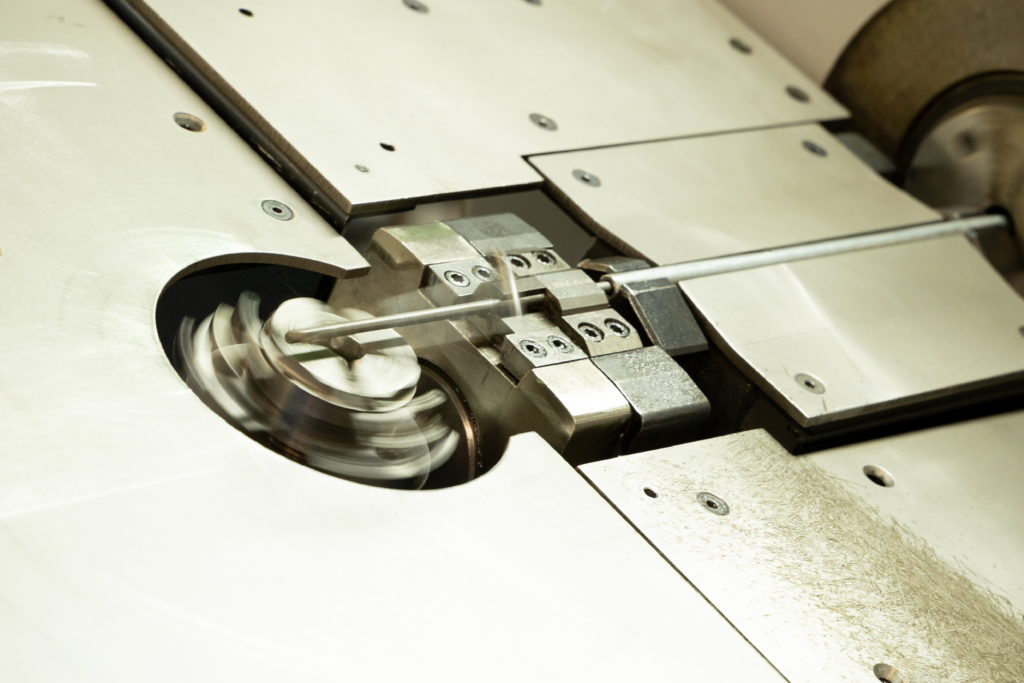
In modern metal manufacturing, few processes offer the versatility of wire forming. From simple components to complex, high-precision geometries, wire-formed parts are found in industries as diverse as automotive, medical, and household appliances.
For companies that design and assemble high-performance products, having a supplier that specializes in precision wire forms provides a direct competitive advantage: shorter development times, greater dimensional consistency, and compliance with critical specifications.
At RYPSA, we develop industrial wire forms using in-house engineering and advanced technology to meet our customers’ most demanding requirements.
What are wire forms?
Wire forms are metal components manufactured from steel wire or other alloys through controlled bending, forming, and shaping processes to achieve specific geometries.
Unlike conventional springs, wire forms can take on two-dimensional and three-dimensional configurations tailored to very specific functions within an assembly.
Among the most common types are:
- Retention hooks and rings
- Wire supports and brackets
- Flexible Fastening Components
- Drive and Guide Components
- Tension and Anchoring Components
Industrial Applications of Wire Shapes
The versatility of wire forms makes them essential components in many industrial sectors where functionality, strength, and dimensional accuracy are required.
Among the main applications are:
- Automotive industry: component retainers, cable guides, seat brackets
- Appliances: interior racks and baskets, opening mechanisms
- Medical industry: accessories for diagnostic equipment, hospital bed frames
- Energy sector: fasteners for transformers and light fixtures
In all these cases, the wire shapes must meet strict dimensional tolerances and maintain their mechanical properties throughout their service life.
Wire Form Engineering and Development at RYPSA
At RYPSA, we have an in-house engineering team that specializes in the design and development of wire forms tailored to each customer’s specifications.
Our development process takes into account technical variables such as:
- Wire diameter and alloy
- Minimum bending radius without loss of properties
- Required geometric tolerances
- Expected functional load
- Surface Finish and Corrosion Protection
This in-house engineering capability makes it possible to reduce prototyping times and make design adjustments quickly before beginning mass production.
Quality Control for Precision Wire Shapes
High-volume production of wire forms requires inspection and validation processes that ensure consistency in every batch manufactured.
At RYPSA, we implement controls that include:
- Dimensional inspection by batch
- Load and Deformation Tests
- Automated Visual Inspection
- Statistical Process Control (SPC)
These checks ensure that each part meets the required specifications before leaving the factory.
Wire forms are essential components in modern industrial manufacturing, found in systems where geometric precision and mechanical reliability are critical.
At RYPSA, we combine specialized engineering, advanced forming technology, and rigorous quality control to produce wire forms that meet the industry’s most demanding standards.