In the global automotive industry, quality is non-negotiable. Every metal component in a vehicle must meet strict safety, performance, and traceability specifications.
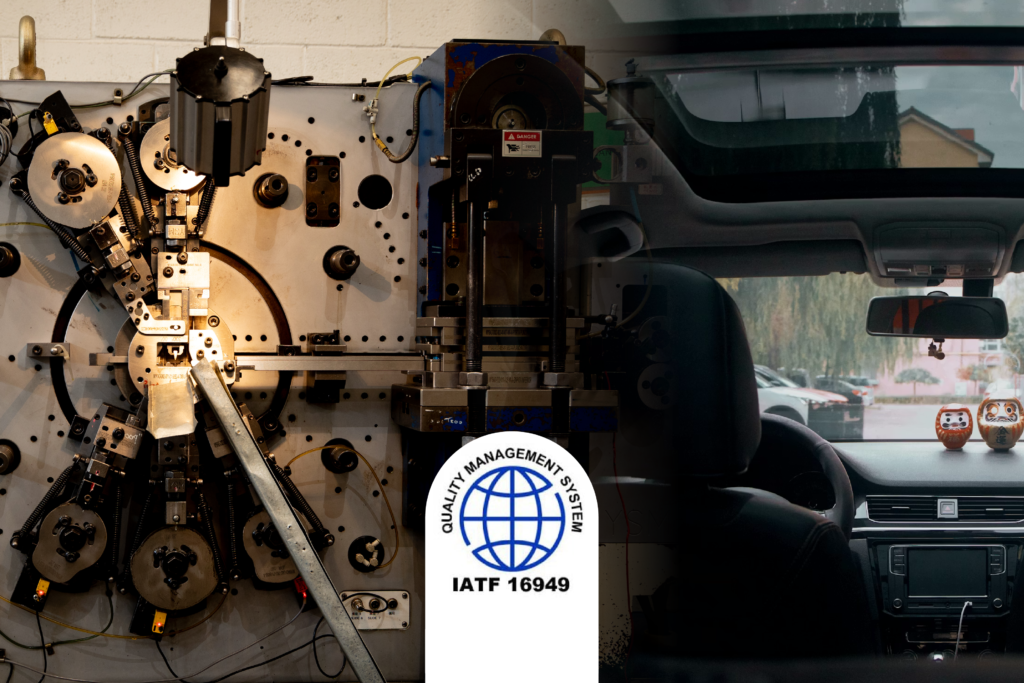
In this context, IATF 16949 in the automotive manufacturing industry represents the most rigorous international standard for quality management systems among auto parts suppliers.
For Tier 1 and Tier 2 companies and OEMs, working with suppliers certified under IATF 16949 is not just a preference—it is a strategic requirement for ensuring supply chain stability.
What is IATF 16949 certification?
IATF 16949 certification establishes guidelines for a quality management system specifically tailored to the automotive industry, ensuring that every production process meets global standards.
This system is based on key principles such as:
• Defect prevention
• Reduction of process variability
• Continuous improvement
• Complete production traceability
• Operational risk management
• Compliance with specific automotive customer requirements
Unlike other quality standards, IATF 16949 is designed exclusively for the automotive manufacturing industry, making it the global benchmark for the sector.
How RYPSA Integrates IATF 16949 into Its Manufacturing Processes
At RYPSA, IATF 16949 certification is a central part of our daily operations. It is not merely an administrative document, but an active system that influences every stage of the production process.
The implementation of IATF 16949 in RYPSA's automotive manufacturing is reflected in:
• Design and development of precision tooling
• Advanced stamping processes
• Manufacturing of automotive springs
• Production of metal clips and fasteners
• Statistical Process Control (SPC)
• Internal and external quality audits
Each process is carried out using internationally recognized automotive methodologies such as:
APQP — Advanced Quality Planning
PPAP — Production Part Approval Process
AMEF — Failure Mode and Effects Analysis
Control Plans
These methodologies ensure that each component meets critical dimensional, mechanical, and functional specifications.
Benefits of Working with an IATF 16949-Certified Supplier
Choosing an IATF 16949-certified supplier in the automotive manufacturing industry offers numerous strategic advantages for OEMs and Tier suppliers.
Among the main benefits are:
• Supply chain risk reduction
• Lower component defect rate
• Compliance with global OEM standards
• Full traceability by production batch
• Documented continuous improvement
In an industry where automotive recalls can result in losses amounting to millions, certified quality is not an expense—it is a strategic investment.
Application in Critical Automotive Components
At RYPSA, we manufacture precision metal components for systems where safety and reliability are essential.
Among the main applications are:
• Braking systems
• Steering columns
• Structural mechanisms
• Restraint systems
Each part is manufactured under rigorous quality controls in accordance with IATF 16949, ensuring reliable performance even under extreme conditions of vibration, load, and temperature.
Conclusion
At RYPSA, quality isn't checked at the end of the process.
It is designed from the very beginning.
The implementation of IATF 16949 in automotive manufacturing ensures that every component meets the standards required by the global industry, enhancing reliability, traceability, and consistency at every stage of production.